2025-12-26 - Verdichtung
Verdichtung is German word that loosely means "densification". It represents an alternative to urban sprawl⁰ that is prevalent in US cities and has been the dominant strategy for Zurich's expansion.
What it means is that even though there would theoretically be new space available on the outskirts, the city, or canton, instead of dedicating it to new construction it prefers¹ to repurpose existing buildings by increasing the number of floors or by reducing the distance between buildings.
I am actually currently living in such a building created from Verdichtung where before this was partially a parking lot and partially an annex of another building. Looking at historical maps, there are many such occurences
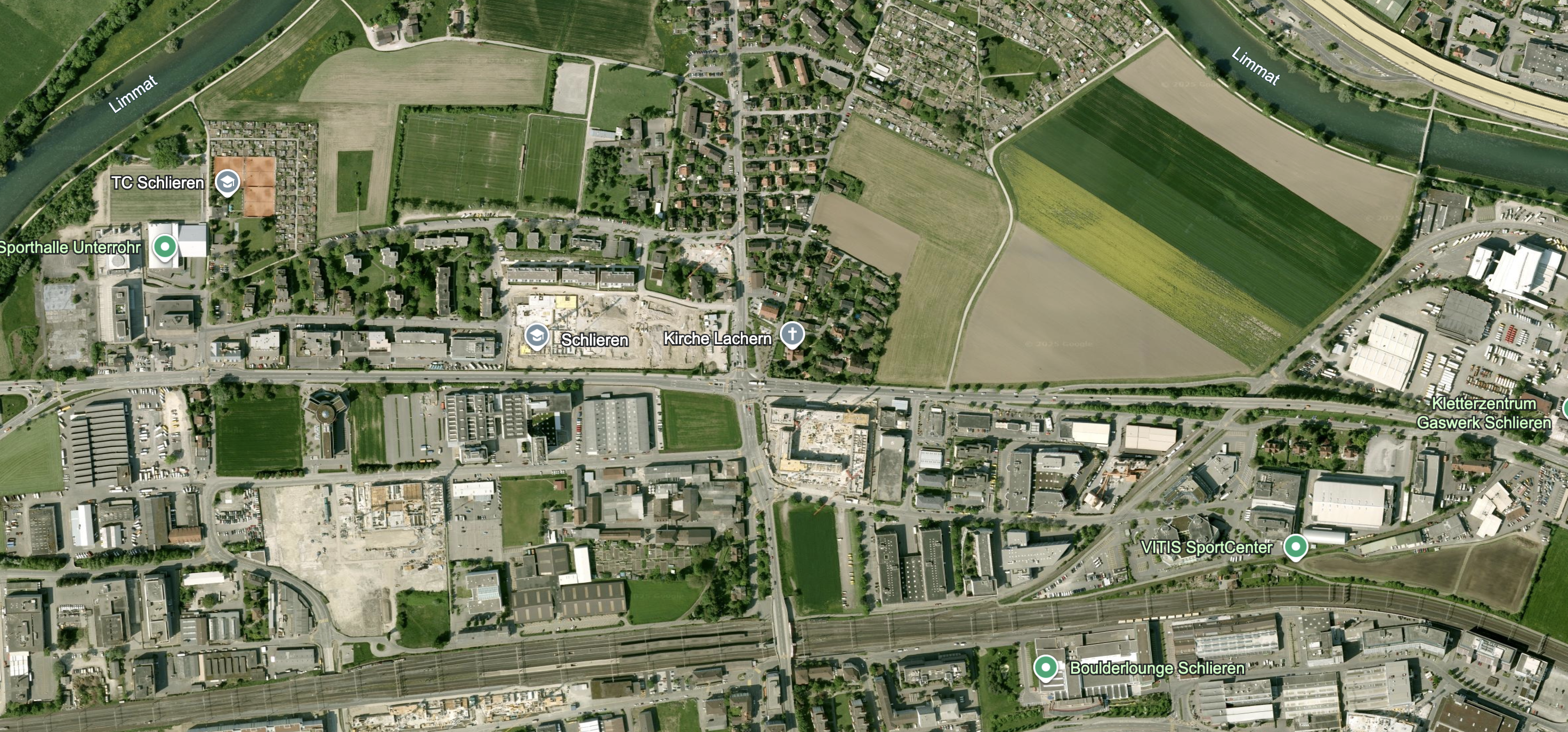
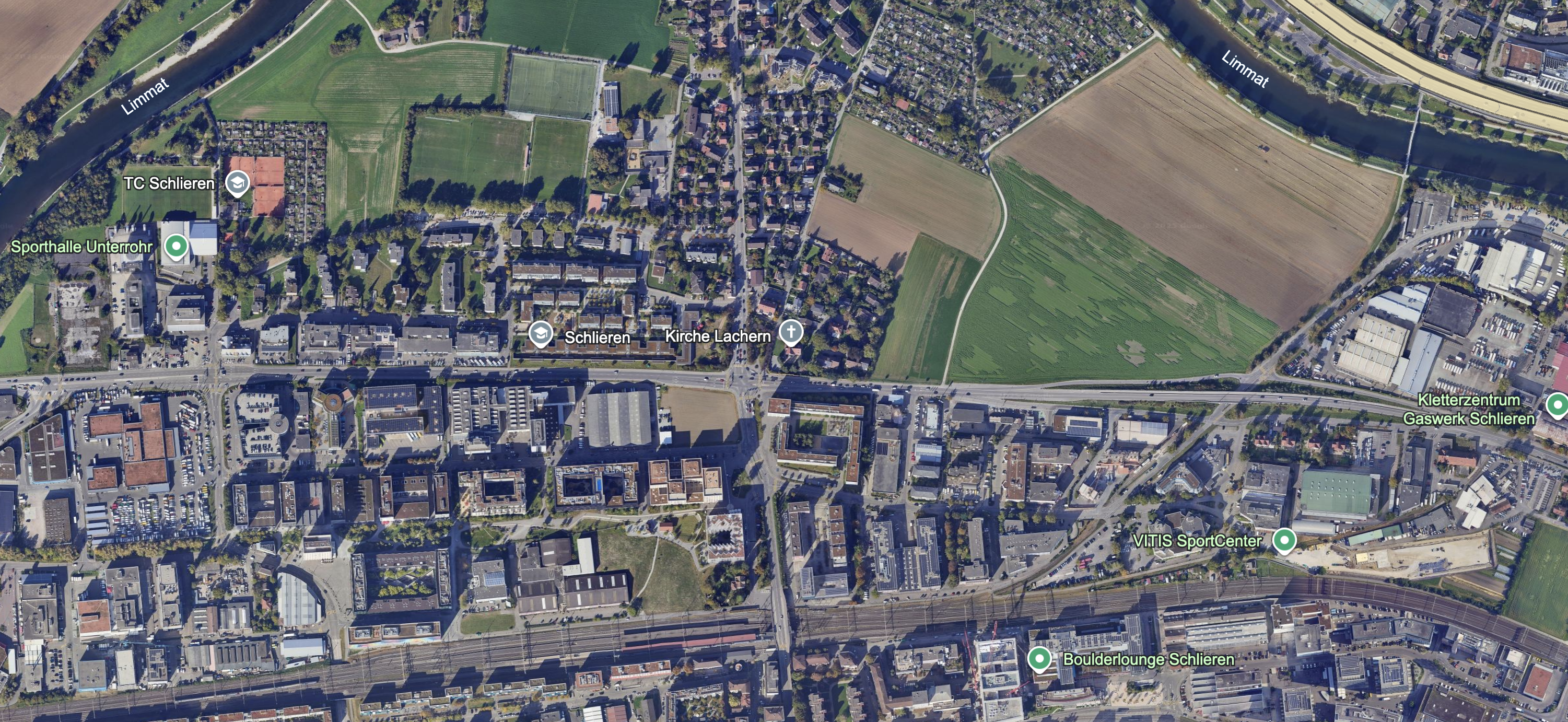
Two Google Earth images of Schlieren from 2009 and 2024 showing the practicalities of verdichtung. Look out for the central area turning multiple smaller housing blocks into a larger one and eliminating "wasted space".
But top-down maps only tell half the story as they often look directly from above, Verdichtung also often means an increase in height. This does create more living space overall but it also creates some weird apartments that feel way too close together and that often can only serve people that do not are financially unable to have any demands for either sunlight, privacy, or quietness. For example, a parking lot not far away was repurposed into a hotel-like complex where balconies made out of pure concrete are facing each other.
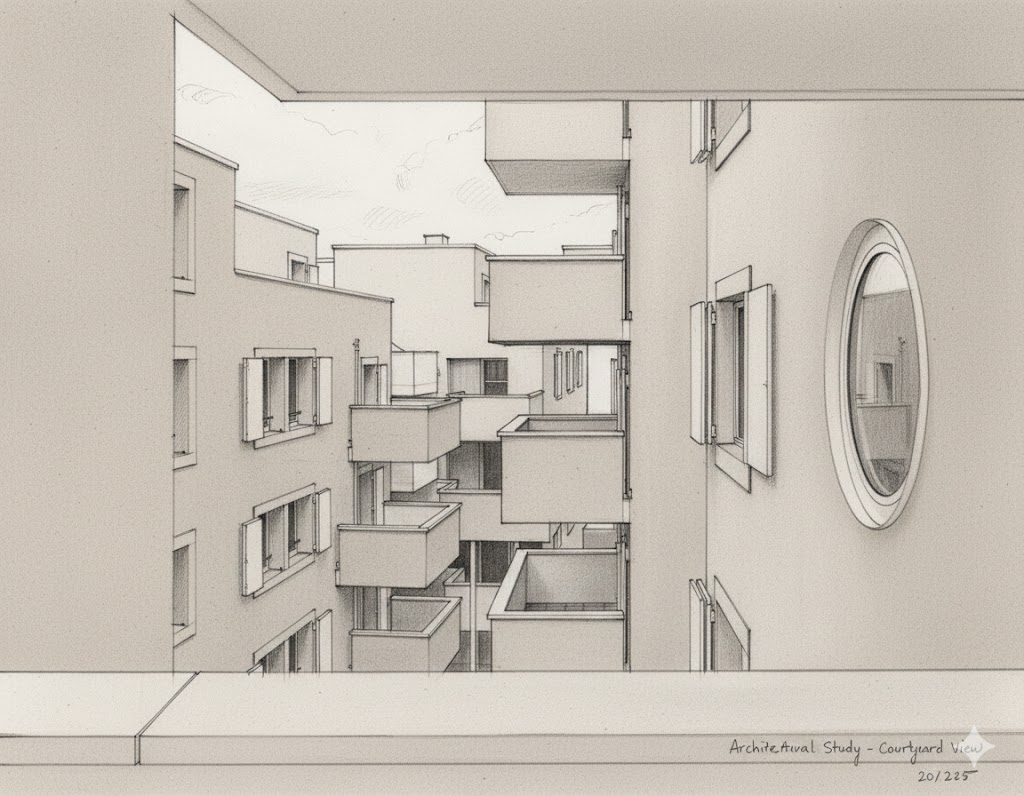
Example sketch (not real but pretty much 1:1 of an apartment complex built close to where I live in 2025) of what Verdichtung looks like in practice. There was a parking lot before here, now we have balconies made out of pure concrete facing each other with no sunlight, privacy, or coziness. The prices are sure high though!
Effect on ownership?
Ownership in Zurich has undergone a quiet shift in the last years; where private individuals held 41% of the stock in 2010, they now account for barely 31% in 2024 (data from stadt-zuerich.ch). While this generally follows the trend of Switzerland simply having the lowest home ownership in Europe (link), it could be empirically argued that Verdichtung has played a role in this shift as demolishing and building denser is highly complex and expensive, something which would be nearly impossible to do by a private individual, especially so since your neighbors can essentially complain and delay the project for a while. Compare that to you just buying a new plot of land with reasonably well defined rules and building there or just renovating an existing building and it is night and day.
Hence projects doing Verdichtung generally lead to four ownership scenarios for land that might have been previously owned by individuals:
- A private company does the project and rents out the flats generating very good stable and predictable revenue per m2.
- A Genossenschaft (cooperative) or a pension fund does 1.
- A private company does the project and sells the flats to individuals (less often than 1., companies tend to love the stable income of renting out).
- The city does the project and rents out the flats, often dedicating a percentage of the flats to social housing.
Note: Neither cooperatives nor the city typically sell flats. Mostly because it's a massive effort for them to acquire the property, and they really love recurring revenue and absolutely would hate to deal with short-term income as they are generally non-profit institutions.
Looking at the above, we see that in most scenarios, Verdichtung leads to a shift from private ownership to either private companies or cooperatives and private individuals renting out.
Zurich's ups and downs
Zurich has a weird history when it comes to its urban population where its population peaked in the 1970s (at ~422,000), then dropped due to a push for suburbanization and only recently reached the same level again. This is pretty different from many other urban centers as urbanization has been rampant in Europe in the last decades and has been influenced by various factors like the different tax rates across the canton.
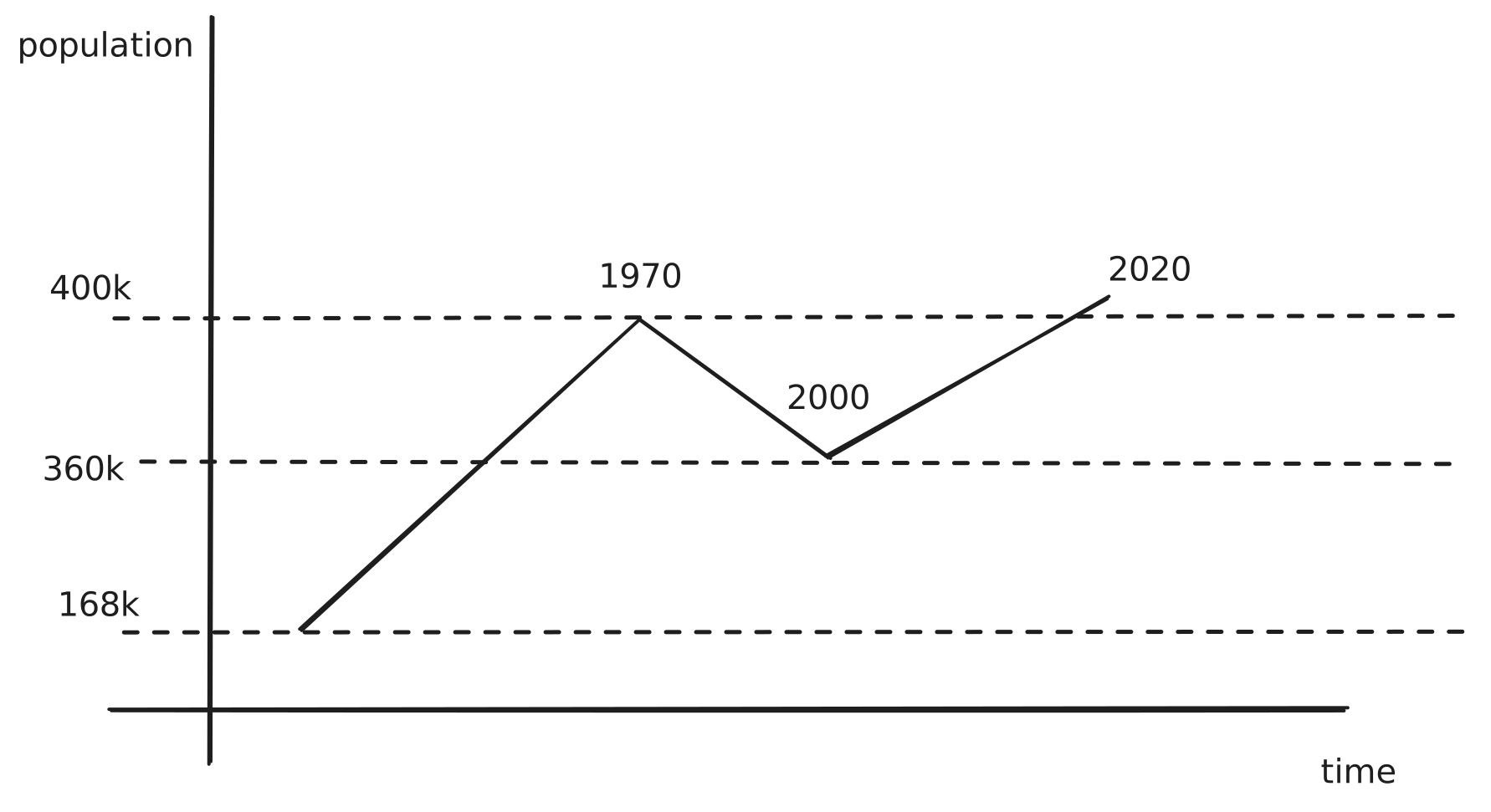
The population of ZRH over time, rough estimate, source: Federal Statistical Office of Switzerland.
Any alternatives?
Short-term, this seems like much less nice than living in a suburban area but long-term this is much more sustainable. Has it been able to meet demands? No. Zurich's buying market is one of the worst in the world according to the UBS Bubble Index (ranked #3 globally in 2024) having very high prices and some risk of a market correction. Are there many alternatives? No. Not really as free areas are sparse and the city is sandwiched between the lake, the Uetliberg and Züriberg hills, and an airport that is just 10 km away from the city. The reality of the housing market reflects this sharply as prices drop steeply as soon as you hop over a ridge or float down the Limmat.
Verdichtung, however does have some upsides. Commute times within the city often are within the magical boundary of 15 minutes (see 15 minute city) and, due to the short distances and okayish infrastructure, allow for using a bicycle².
Wrap-up
Verdichtung is the price we pay for not having suburbs but we at least get great infrastructure at a reasonable cost. You could say it's Swiss efficiency applied to the housing problem.
Footnotes
⁰ Zersiedlung is the Swiss-German term for urban sprawl.
¹ If we look under the hood, this preference is a mandate based on the federal-level Raumplanungsgesetz (RPG) linked here. Which says that development has to be done inwards while considering an adequate "quality of housing". Interestingly, and, if you're familiar with Swiss law unsurprisingly, the formulation is extremely vague as it also mandates decentralization, environmental protection, and integration of foreigners so ultimately it's kind of a catch-all that can be used to justify almost anything 🤷♂️ and is one of those things that only works in Switzerland where checks and balances are abundant and abuse is relatively rare.
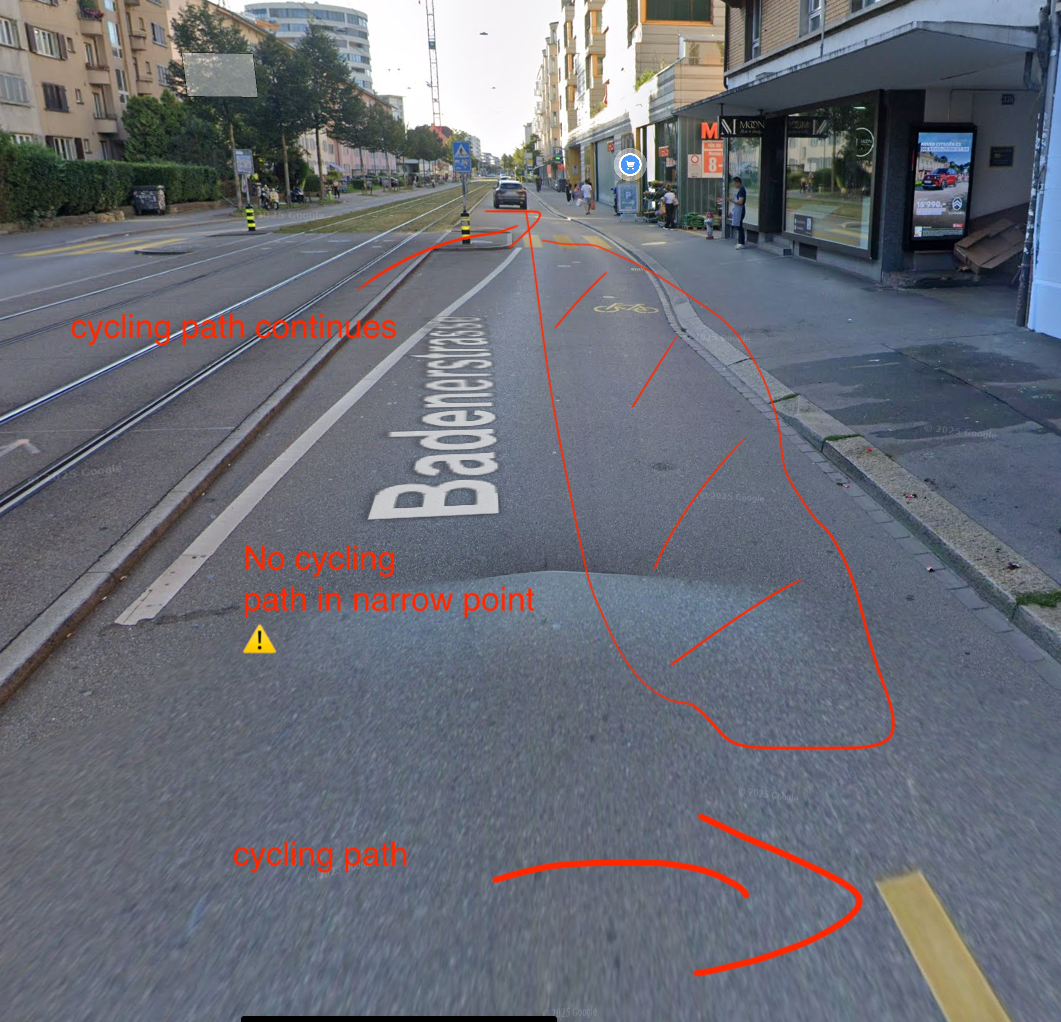
² At least when you're OK that your bicycle lane can randomly stop at a narrow point or street corner that is not wide enough and then continue when the road widens. Example below:
The popular YouTube channel Not Just Bikes released a comprehensive video about ZRH if you're interested in more.